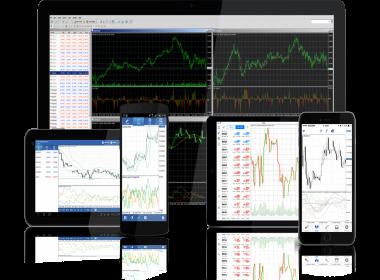


Building a significant equity portfolio through years of disciplined investing creates a financial asset that most investors are simultaneously proud of and quietly anxious about. The anxiety is rational a portfolio that has taken a decade to build can lose twenty to thirty percent of its value in a matter of weeks during a severe market correction, and while the long term investor knows intellectually that such corrections are temporary, the financial and psychological reality of watching hard won wealth compress rapidly is genuinely difficult to manage. The derivative instruments available on Indian exchanges offer portfolio holders a structured, regulated mechanism for managing this downside risk without requiring the sale of beloved long term holdings. The Nifty 50 option chain displaying all available index options across every strike and expiry provides a complete menu of hedging instruments calibrated to the broadest Indian equity benchmark. For investors whose portfolios are heavily weighted toward banking and financial services stocks, the Bank Nifty futures market provides an alternative and often more precise hedging instrument that directly addresses the sector specific risk embedded in banking heavy holdings. This article examines how Indian equity investors can use these instruments for genuine portfolio protection rather than speculation.
Why Portfolio Hedging Through Derivatives Makes Sense for Indian Investors
The instinctive response to the risk of a market correction among most Indian retail investors falls into one of two categories either do nothing and ride out the correction, or sell a portion of the equity holdings to reduce exposure. Both responses have genuine merit in specific circumstances, but both also carry costs that are frequently underweighted in casual analysis.
Riding out the correction without any protective action is the correct choice for a long term investor who has a decade or more before they need their capital and who can genuinely sustain the psychological experience of a significant portfolio decline without being tempted into panic selling at the trough. The risk is that few investors accurately assess their own psychological resilience to paper losses before experiencing a real forty percent drawdown.
Selling equity holdings to reduce exposure before or during a correction avoids the paper loss but creates taxable realisation events potentially triggering capital gains tax on years of accumulated unrealised gains and risks missing the subsequent recovery if the timing of re entry does not match the timing of the exit. It also disrupts the compounding process for the portfolio's highest conviction holdings at precisely the moment when those companies' fundamental values may be most attractively priced.
Hedging through index derivatives buying put options on the Nifty 50 or selling Bank Nifty futures against a banking heavy portfolio provides temporary downside protection without triggering the tax consequences of selling equity holdings and without permanently disrupting the portfolio's long term compounding trajectory. The cost is the premium paid for the protection or the opportunity cost of capped upside from the short futures position a known, manageable expense rather than the open ended uncertainty of an unhedged correction.
Computing the Hedge Ratio for Your Specific Portfolio
Effective portfolio hedging through index derivatives requires computing a hedge ratio the number of derivative contracts required to offset a meaningful proportion of the equity portfolio's market risk. This calculation is not arbitrary; it depends on the relationship between the portfolio's value, the portfolio's sensitivity to the index's movements, and the contract size of the chosen hedging instrument.
For a portfolio of fifty lakh rupees that is broadly diversified across Indian equities in proportions similar to the Nifty 50 index, the Nifty beta is approximately one meaning the portfolio can be expected to move roughly in line with the Nifty 50 on a percentage basis. A single Nifty options contract covers a notional value equal to the lot size of fifty units multiplied by the index level at a Nifty level of twenty two thousand, one contract represents eleven lakh rupees of notional coverage. Hedging the full fifty lakh portfolio would therefore require approximately four to five contracts to achieve complete coverage, with the actual number depending on the chosen strike price relative to the current index level.
For a portfolio concentrated in banking and financial services stocks say, a thirty lakh portfolio with sixty percent allocated to private banks and NBFCs the more appropriate hedging instrument may be Bank Nifty futures rather than Nifty index options. The banking heavy portfolio's price sensitivity tracks the Bank Nifty index more closely than the broader Nifty 50, meaning that Bank Nifty futures hedges will provide more precise offset during banking sector specific corrections than broad Nifty index instruments.
Put Options Versus Futures for Hedging The Critical Difference
For portfolio protection specifically, the structural difference between using put options and short futures as hedging instruments is critically important. A short Bank Nifty futures position hedges the portfolio asymmetrically it reduces both downside risk and upside participation simultaneously. If the portfolio rallies strongly, the gains on the equity holdings are offset by losses on the short futures position, capping the net portfolio return to approximately the difference between the portfolio's performance and the futures index performance.
A put option hedge buying Nifty 50 put options at a strike below the current index level provides asymmetric protection: it limits the downside loss if the market falls significantly while leaving the full upside participation intact if the market rises. The cost of this asymmetry is the premium paid for the put options, which is a certain expense regardless of subsequent market direction.
The choice between these two hedging approaches for any specific investor depends on their view of the probability and direction of large market moves. In an environment where the investor believes significant downside is possible but meaningful upside also remains, put options are structurally superior the asymmetric payoff profile is worth the premium cost. In an environment where the investor simply wants to neutralise market exposure for a defined period perhaps while they are travelling, during a personal financial transition, or during an upcoming high uncertainty macro event futures hedging is more cost effective because it requires no premium payment, only margin.
Choosing the Right Strike for Put Option Hedges
When choosing put options from the Nifty 50 chain for portfolio hedging purposes, the strike price selection involves a trade off between the level of protection purchased and the premium cost required to purchase it. Three broad categories of strikes are available, each with a distinct protection cost profile.
At the money puts with strike prices near the current index level provide immediate protection from the current level, begin generating protective value as soon as the index falls below the strike, and cost the most in premium because they have the highest probability of providing protection. These are the most complete protection instruments but the most expensive per unit of coverage.
Out of the money puts with strike prices below the current index level by five to ten percent provide protection only after the index has already fallen the distance between the current level and the strike price. They cost considerably less than at the money puts because they have a lower probability of being reached, and they function more as catastrophic loss insurance than as immediate portfolio stabilisers. For investors primarily concerned about extreme tail risk scenarios rather than routine ten percent corrections, out of the money puts offer the most cost efficient protection.
Deep out of the money puts positioned fifteen to twenty percent below the current index level cost very little individually but provide protection only in severe market dislocations of the kind that occur rarely but with catastrophic impact when they do. A small allocation to deep out of the money puts a few contracts representing a modest premium expenditure can provide meaningful value in scenarios that would otherwise be financially devastating, making them worth considering as a permanent tail risk component of a large portfolio's protective structure.
Managing the Hedge Through Changing Market Conditions
A static hedge buying put options once and holding them passively to expiry provides a fixed, time bounded protection structure that requires no management but also adapts poorly to changing market conditions. As the index level moves significantly from the original entry level, the strike price chosen for the initial hedge may no longer be the most appropriate protection level, and the hedge ratio may require adjustment if the portfolio composition has changed.
Active hedge management adjusting the protection level, rolling expiring puts to the next month, and recalibrating the contract count as the portfolio grows produces more consistent protective outcomes than passive static hedges but requires ongoing attention. The process of rolling puts closing the expiring month's position and opening a new position in the next monthly expiry at an appropriate strike is the primary ongoing management task, typically performed once monthly during the final week before each expiry.
The total annual cost of maintaining a rolling put hedge program on a large Indian equity portfolio comprising twelve months of put premiums paid across monthly rollovers is the price of the insurance program, and evaluating this cost as a percentage of portfolio value each year gives the investor a clear picture of whether the protection is being purchased at reasonable value or at an excessive cost that warrants a recalibration of the approach.
When to Remove the Hedge and Restore Full Market Exposure
Just as the decision to establish a hedge requires specific analytical triggers elevated uncertainty, stretched valuations, proximity to personal financial goals, or an upcoming high risk macro event the decision to remove the hedge and restore full unprotected equity exposure should be equally deliberate and trigger based rather than impulsive.
Common analytical conditions for hedge removal include: the high uncertainty event that prompted the hedge has passed and resolved without the feared adverse outcome, valuations have corrected to levels that offer compelling value and reduce the probability of further significant decline, or the investor's personal financial position has changed in a way that increases their capacity to withstand a potential correction without financial damage.
Removing the hedge before its expiry by selling the put options rather than holding to expiry recovers the remaining time value embedded in those puts, providing a partial recovery of the premium cost. This partial recovery reduces the net cost of the hedge for the period it was held, improving the overall economics of the protection program for investors who actively manage entry and exit timing rather than holding mechanically through scheduled expiry.
Managing risk through derivatives requires exactly this kind of thoughtful, deliberate decision making establishing positions with clear analytical rationale and removing them when that rationale no longer holds, rather than maintaining positions out of inertia or abandoning them out of impatience with their cost. This discipline is what distinguishes genuine portfolio risk management from costly insurance that provides protection during unlikely scenarios at the expense of returns during the majority of market conditions.
Also read about:
How Can Freelancers Manage Irregular Income Effectively
Top 10 Questions About Ceramic Coating Answered
Monthly Car Rental in Dubai